A little more clarity
Time Blocking: How to Make a Flexible Schedule
Time blocking means reserving a period in your calendar for a particular purpose. Instead of keeping “write the draft” only on a list, you decide where that work could realistically happen alongside meetings, routine responsibilities and rest.
In this guide
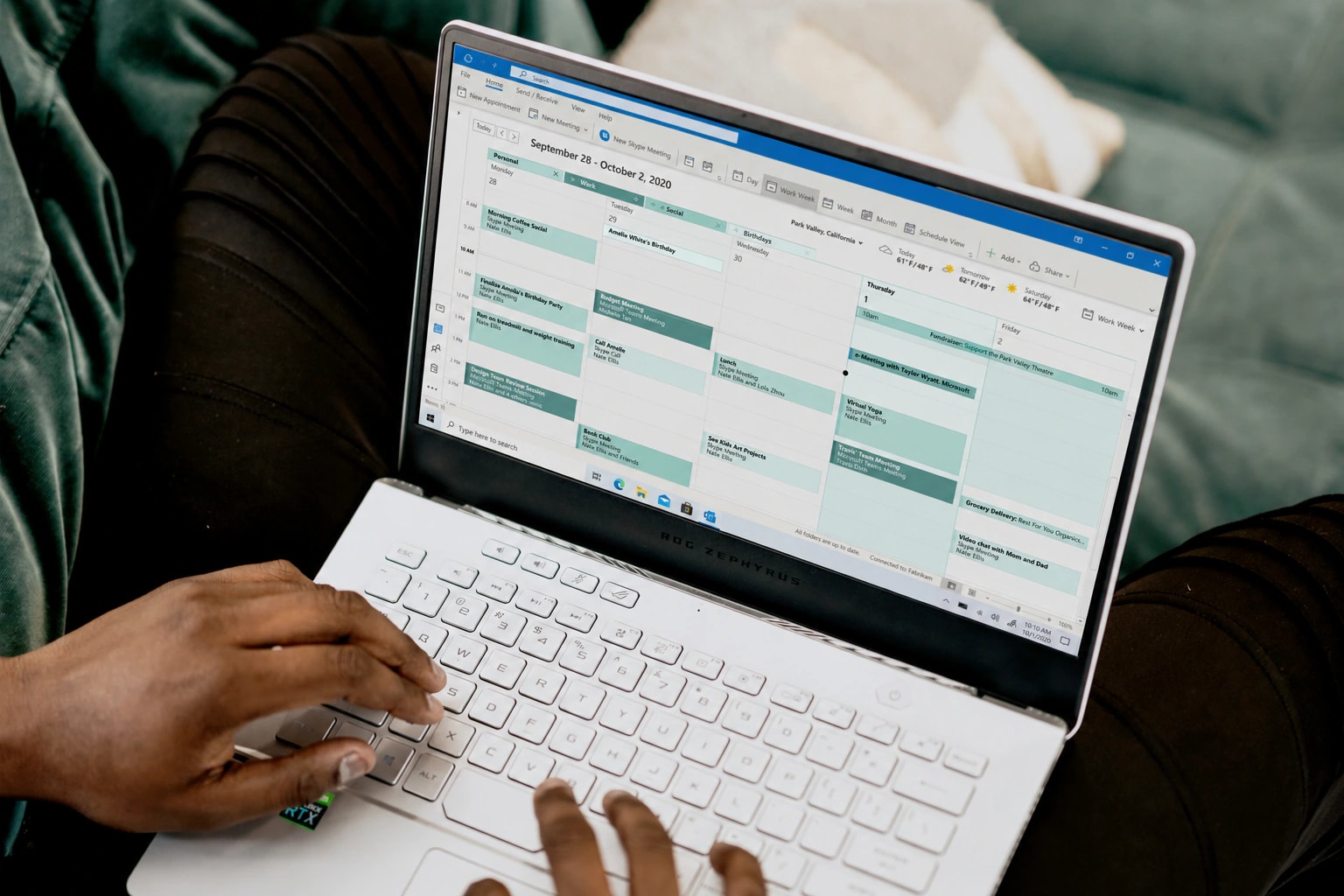
The calendar is a proposal you can revise. A useful block makes a priority easier to act on; it should also make it easier to see when the current workload does not fit. Filling every space does not make the plan more realistic.
What is time blocking?
A time block answers “What is this period for?” It might be for a defined work step, several routine messages, preparation for an appointment or a break. The block helps connect a commitment with available time.
A task list and a calendar serve different purposes. The list can hold possible work without implying it all belongs today. The calendar shows how selected work fits around other commitments. Keeping both can be simpler than trying to give every possible task an immediate time slot.
Time blocking is also distinct from timeboxing. A timebox sets a limit for an activity, such as exploring a question for a fixed period before deciding what to do next. A block reserves time; it does not necessarily mean the task will be finished when that period ends.
What does the research support?
Research provides a broader basis for planning than for any particular branded calendar method. A meta-analysis of time management found relationships with wellbeing and performance, with considerable variation across studies. It does not establish that time blocking is superior to every other planning format.
The approach here is a practical way to apply planning principles: choose a purpose, estimate the demand, identify a first action and prepare for changes. The sample calendar is an illustration, not a tested intervention or a promise of greater output.
Build around the commitments you already have
Begin with meetings, travel, caring responsibilities, appointments and any work that must happen at a fixed time. Include preparation and transitions where they are relevant. Then look for realistic spaces for the work you want to protect.
If the whole day is already committed, the next step is a trade-off. You might change scope, move a deadline, request cover or remove an activity. A calendar cannot make several incompatible commitments happen simultaneously.
For a first attempt, choose one important piece of work rather than rebuilding your entire week. Name the block by its intended action: “Draft the opening section” gives you more direction than “focus time.”
Estimate the work, including its uncertainty
Use experience from comparable tasks. Consider finding materials, checking details and communicating the result as part of the work rather than invisible additions.
Research on the planning fallacy shows why relying only on an imagined smooth plan can produce optimistic estimates. Looking at how similar work actually unfolded is a more grounded starting point.
If the work is unfamiliar, give the first block a learning purpose. For example: “Read the brief, identify missing information and decide the scope.” You can then estimate the next stage with better information. There is no need to pretend you know the completion time before you understand the task.
A worked example of a flexible schedule
Imagine a morning with a fixed team call and a report to prepare. Your role also includes requests that sometimes need a quick response. You have agreed with your team which requests are genuinely urgent.
| Window | Purpose | First action | If interrupted |
|---|---|---|---|
| Before the call | Prepare the decision needed | Read the open question and note a recommendation | Leave the note where you can resume |
| After the call | Draft the report summary | Use the agreed outline and key figures | Record the stopping point; move the remaining work deliberately |
| Later available window | Handle routine requests | Review the shared queue | Escalate anything that changes the main deadline |
| An agreed pause | Stop the work demand for a while | Step away from the task | Arrange cover if the role requires it |
The exact lengths depend on the work and the day. The important feature is that a disruption has an explicit response. A missed block becomes a decision about what moves, rather than a reason to squeeze every later commitment.
Keep transitions and recovery visible
Moving between activities can involve closing files, recording decisions, travelling or preparing materials. Leave space where those transitions actually occur. If your schedule repeatedly runs late at the same point, examine what has been left out.
Rest belongs in the plan too. Research on micro-breaks suggests modest benefits for fatigue and vigour, while a brief pause may not be enough after demanding work. Do not treat breaks as an optional reward that disappears whenever a task takes longer.
If you notice repeated errors or increasing effort, consider whether continuing is appropriate. The mental fatigue guide can help you think through recovery without assuming every difficulty needs another scheduling technique.
Make the plan easy to revise
A rigid attachment to the original sequence can create its own difficulty. In laboratory research on specific plans, planning sometimes hindered success when circumstances required recognising an alternative opportunity. That finding does not mean planning is bad; it is a reason to keep the purpose visible when the route changes.
At the end of a block, choose deliberately:
- Continue, if the work remains the best use of the next available period.
- Stop and record the next action, if another commitment now takes priority.
- Revise the scope or ask for help, if the original estimate no longer fits.
- Remove or postpone the task, if its purpose has changed.
For the priority decision, use how to prioritise tasks. To connect several days, try a weekly planning review.
Common questions
How long should a time block be?
Long enough to make a useful piece of progress, while fitting your capacity and circumstances. No single duration is best for every person or task. Start with a manageable period and review what actually happened.
Does time blocking work for unpredictable jobs?
It may help with parts of the day you can influence. For the rest, consider flexible windows, cover arrangements and clear response priorities. A continuous service role may need changes in work organisation before uninterrupted blocks become possible.
What if I never follow my calendar exactly?
Compare the plan with reality. Repeated changes may reveal missing commitments or unrealistic estimates. The goal is a more useful decision process, not perfect obedience to yesterday’s calendar. Start again with a realistic daily plan.
Sources and further reading
- Aeon, B., Faber, A., & Panaccio, A. (2021). Does time management work? A meta-analysis. PLOS ONE, 16(1), e0245066. Broader time-management evidence; it does not establish the superiority of one calendar format.
- Buehler, R., Griffin, D., & Ross, M. (1994). Exploring the planning fallacy: Why people underestimate their task completion times. Journal of Personality and Social Psychology, 67(3), 366–381. Research on task estimates and the relevance of past experience.
- Albulescu, P., et al. (2022). “Give me a break!” A systematic review and meta-analysis on the efficacy of micro-breaks for increasing well-being and performance. PLOS ONE, 17(8), e0272460. Useful context for planning recovery, with no universal best break interval established.
- Masicampo, E. J., & Baumeister, R. F. (2012). Committed but closed-minded: When making a specific plan for a goal hinders success. Social Cognition, 30(1). A laboratory study showing why openness to alternatives can matter alongside a specific plan.