How unscatter was born
The ideas, struggles and everyday challenges that shaped the vision for unscatter.
Turn each card over to discover the story.

Beatrice Bellavere
Founder

Less noise. More clarity.
Why I started unscatter

Room to think
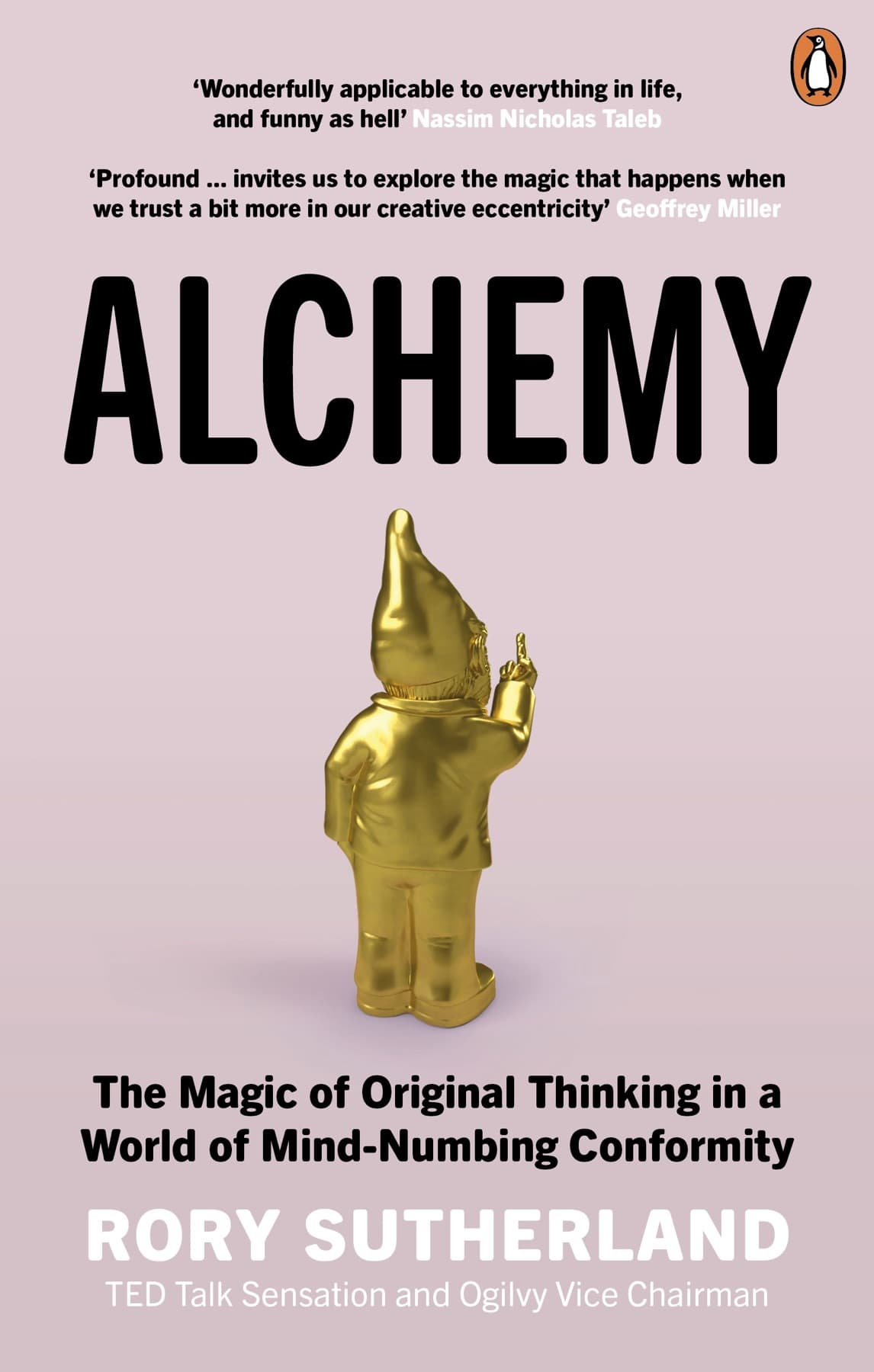
The idea I kept coming back to.
In Alchemy, Rory Sutherland explores how a change in perception can change an experience. His 2011 TED Talk, “Perspective is everything” (6:10), uses a train journey to show that making time more enjoyable can matter as much as making the journey faster. It made me wonder what could change if we had more room to notice, reflect and choose.
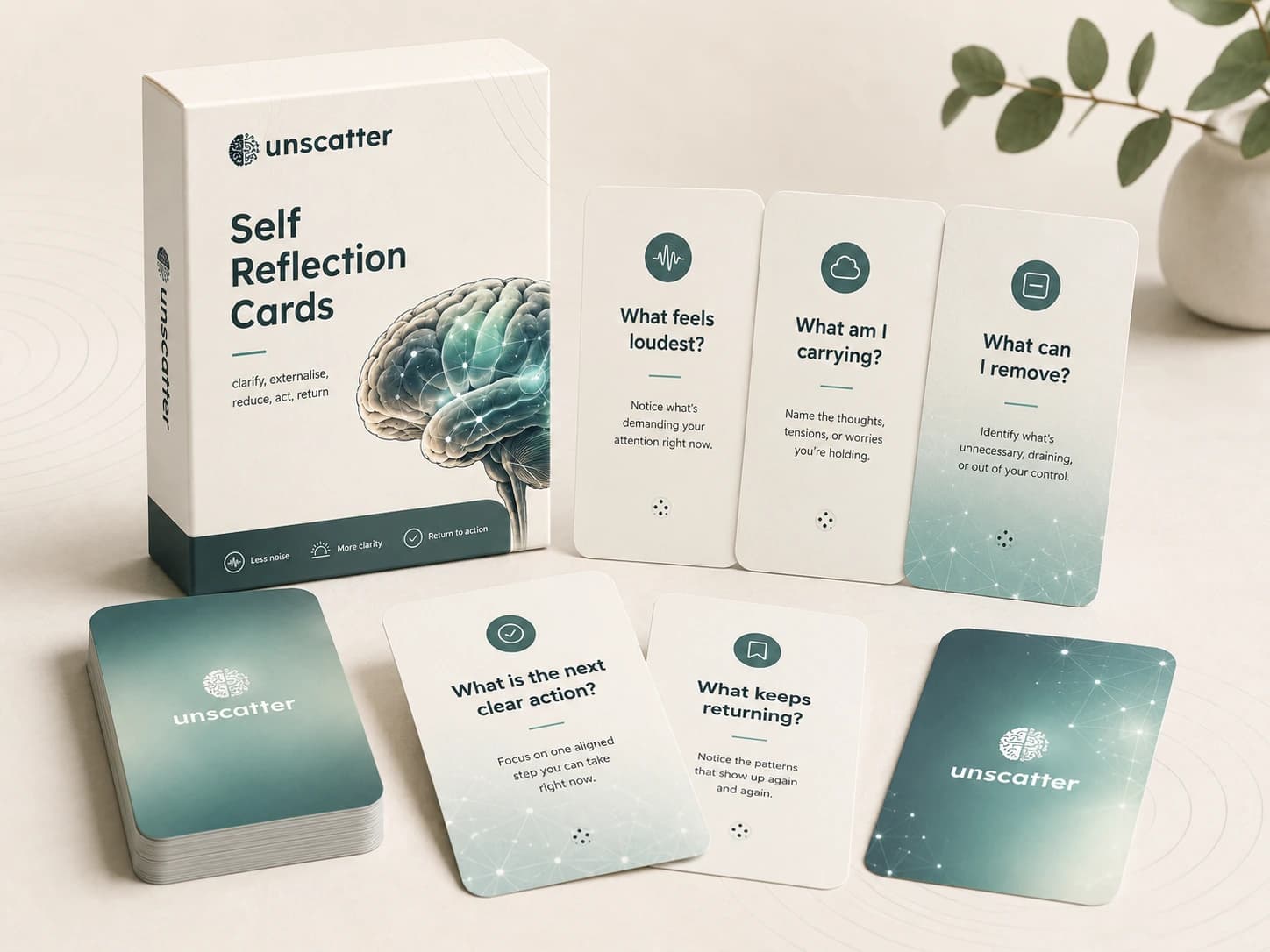
A clearer next step


unscatter is an attention management brand for people who feel scattered by modern life and technology.
We are here to help people understand what is competing for their attention, remove a source of friction, and choose a clear next step. Our purpose is to make more room for a conscious, chosen life.
Human agency is key
Attention matters beyond getting things done. It shapes what we notice, what we give time to, and how we take part in the world. At the centre of unscatter is human agency: having room to understand your options and act on what matters to you.

Our starting point is the principle of removal. Before introducing another system, we ask what could be reduced, clarified, delayed or put down. An unnecessary input. A vague task. An expectation that no longer fits. Sometimes the useful next step is to ask for help or make space to rest.
Notice. Remove. Choose.
We are developing practical guides, reflection exercises and reset tools that connect the science of attention with everyday experience. Clear Mind is part of that work: a way to reflect on what feels difficult now and find a useful place to begin.
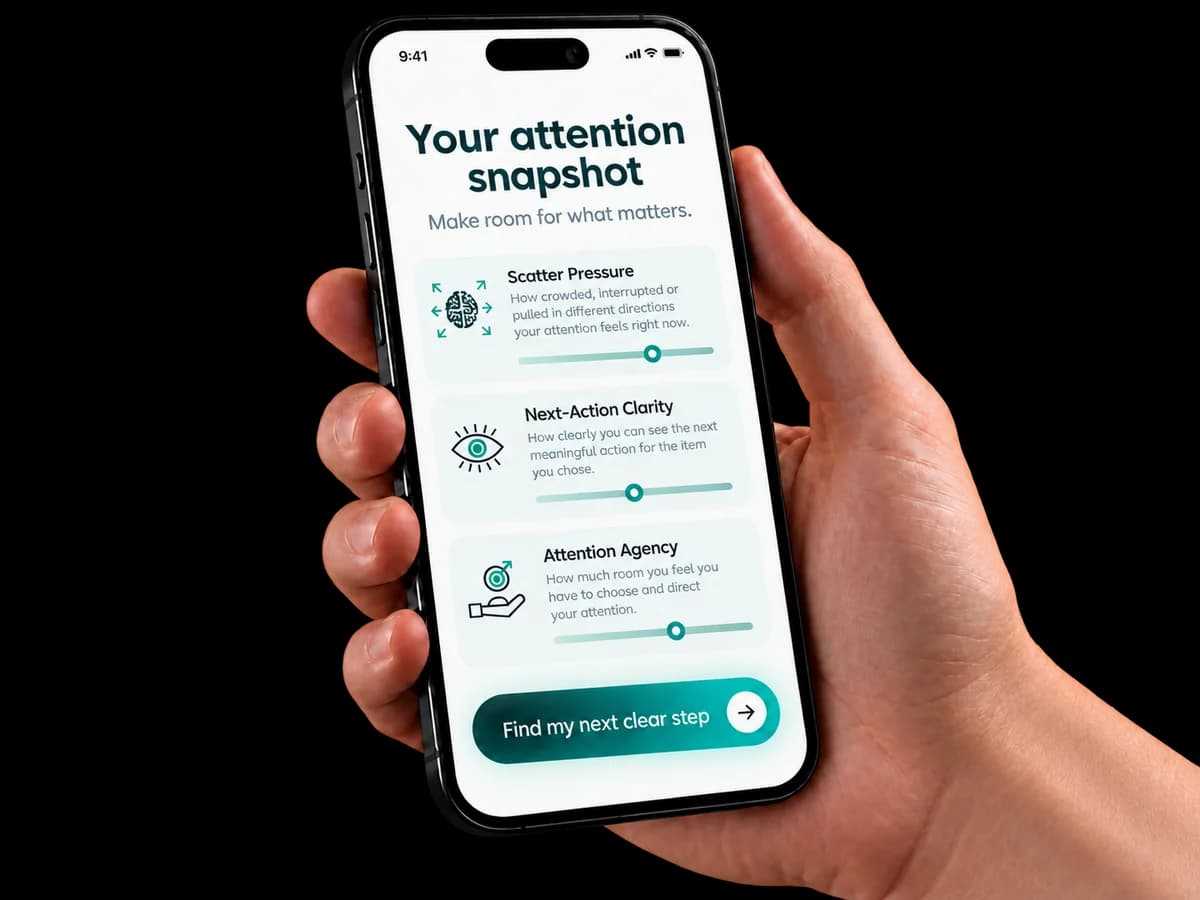
We want research to be understandable and useful. That means explaining what a finding supports, being clear about its limits, and testing the ideas we develop with the people who use them. Our reflection tools are educational; they do not diagnose conditions or measure a person's worth, potential or ability to cope.
Our vision extends to the technology we live with. We believe technology, including AI, should help people understand their choices and exercise their judgement. Human agency should guide how tools are designed and used, including the tools we hope to build.
Some pressures can be changed individually. Others require support, shared responsibility or a change in the systems around us. Making those distinctions is part of finding a useful next step.
A few questions about unscatter
What is unscatter?
unscatter explores attention, behaviour and technology. It brings together practical tools and ideas to help you notice what is taking your attention, reduce mental noise and choose a clearer next step.
Does unscatter diagnose conditions?
No. unscatter is designed for self-reflection, not diagnosis. Its prompts help you look at your own thinking—metacognition—so you can recognise patterns and make your own choices. It does not replace professional assessment or care.
Where should I start?
Try Clear Mind for a short reflection on what is competing for your attention. Use it as a starting point to choose one manageable action, rather than another task to get right. Start Clear Mind
unscatter begins with a simple question: what is taking your attention, and what would you choose to give it to?
Remove what scatters you.