A little more clarity
Deep Work: Finding Focus in an Interrupted Day
Deep work is a common name for giving sustained attention to a demanding activity. You might be building an argument, learning an unfamiliar method, designing something or solving a problem that becomes difficult to hold together when you repeatedly leave it.
In this guide
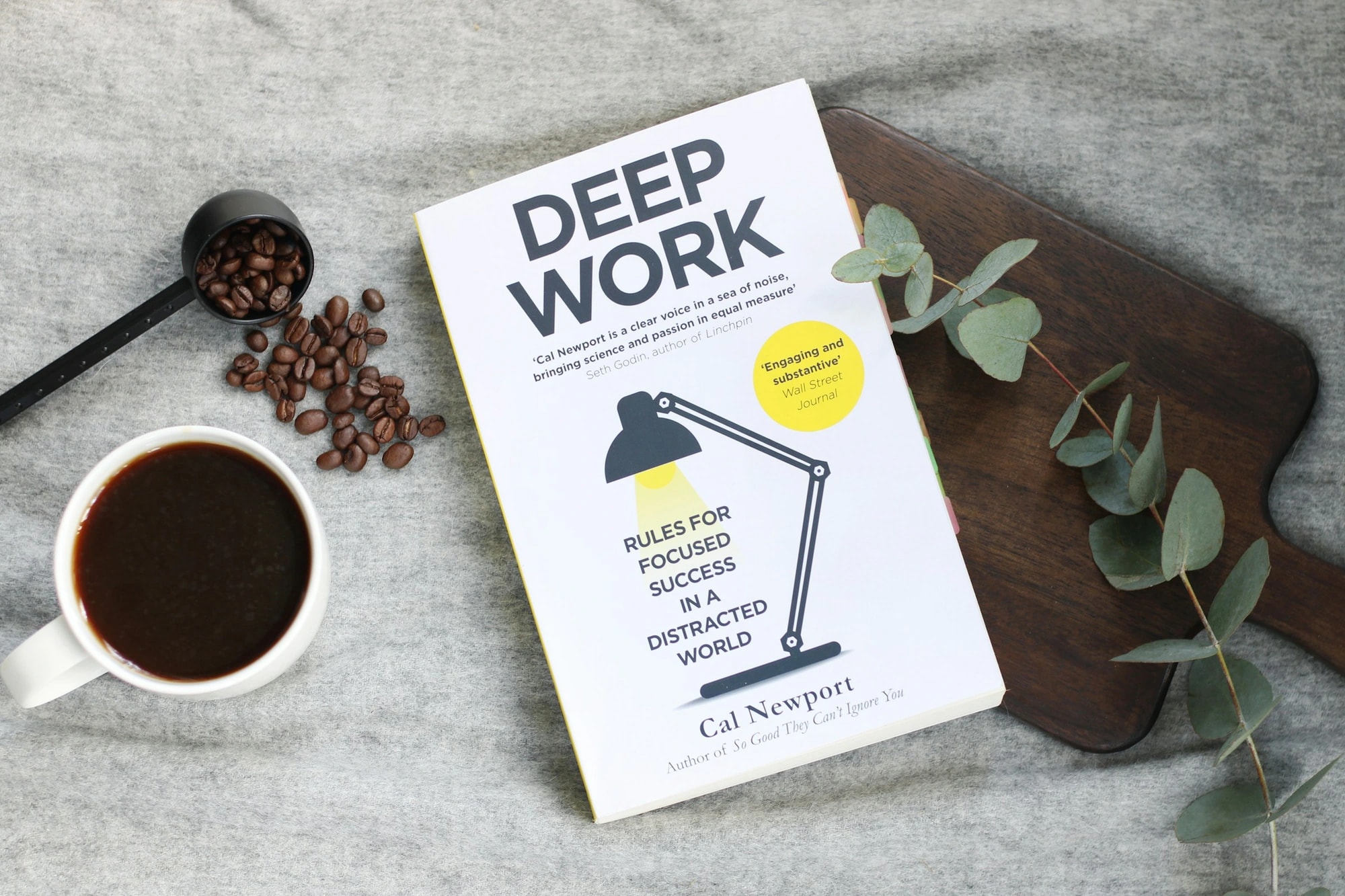
A useful deep work routine begins with the work and the conditions it needs. It does not require a perfect morning, a particular personality or a fixed number of uninterrupted hours. The practical question is how to create a stretch that is long enough to help and realistic enough to use.
Choose work that benefits from a protected stretch
Some tasks need you to keep several ideas connected. Others are short, routine or dependent on quick exchanges. Both can be worthwhile. Calling one activity deep work should not make the rest of your responsibilities seem unimportant.
Identify a task where repeated departures make it difficult to understand, compare or create. Then name a result. “Develop the argument for one recommendation” is a clearer purpose than “do deep work”.
| Activity | What a protected stretch might support | A useful result to aim for |
|---|---|---|
| Drafting an analysis | Keeping evidence and reasoning connected | A rough explanation of the main finding |
| Learning a new procedure | Following and understanding the steps | One explained example and an attempted application |
| Designing a proposal | Comparing options against the same criteria | A comparison with an unresolved question marked |
| Routine administration | Completing a bounded set efficiently | Several entries checked and submitted |
| Team coordination | Sharing context and resolving dependencies | An agreed decision and named next actions |
The last two may need a different arrangement from an individual focus block. Choose the structure that helps the task rather than trying to fit every activity into the same routine.
What the science supports
The relevant research examines specific conditions such as interruptions, task transitions and breaks. It does not establish a single ideal “deep work” schedule or a universal daily limit for demanding work.
For example, experiments by Leroy found that thoughts about unfinished work could interfere with a subsequent task. That is a reason to consider how work is left and resumed, rather than evidence for a particular block length.
Use a protected stretch as a practical design choice. You can test whether it improves the quality or clarity of one piece of work without treating the whole method as a scientifically validated package.
Build the block around an outcome
Before beginning, write down what you want to move forward. Check whether you have the materials, decisions and permission needed. If the brief is unclear, a conversation may be the right first step.
Choose a duration based on the task, your available time and your current state. A short useful attempt is preferable to reserving an ambitious block you cannot protect. Longer periods may suit some work, but the number should remain adjustable.
Decide what you will do if you encounter a genuine dependency. You might mark the question and work on a separate part, or pause and ask for information. Staying at the desk is not automatically useful progress.
If beginning itself feels difficult, use task initiation to make the first action more concrete. If the work is hard to hold together, consider reducing cognitive load before increasing the time allocated.
Protect concentration with a clear contact route
Look at which inputs you can reasonably defer. Close unrelated windows, silence nonessential alerts and place the required materials together. Keep the arrangements simple enough that preparing to focus does not become a second project.
In team settings, explain when you will be available and how urgent requests should reach you. An agreed arrangement is easier to use than silently disappearing while colleagues continue guessing.
If your work involves immediate response, customer care or safety, a long isolated block may not fit. A colleague's coverage, a quieter part of the day or a smaller bounded task may be more appropriate. A routine should work within real responsibilities, and unresolved workload conflicts may require a management conversation.
A worked example: drafting two recommendations
You need to produce a recommendation from a research brief. Instead of setting the goal “focus for an hour”, choose a result: draft the reasoning for two possible recommendations and identify the evidence still missing.
Open the brief and the two relevant source documents. Put the decision criteria at the top of your draft. Leave formatting for a separate pass. Agree that a time-critical request will come by phone, while ordinary messages can wait until your next check-in.
As a new task comes to mind, record enough to retrieve it later. You do not need to pursue it during this block. If the draft exposes an unanswered question, mark it beside the paragraph rather than opening an unrelated search immediately.
At the end, read what exists. Save the draft, identify the next decision and leave a restart note. You now have something concrete to discuss even if the answer remains provisional.
Plan the exit as carefully as the start
Stopping at an agreed point helps the routine fit the rest of the day. Leave the next action, current place and unresolved question where you will see them on return.
Leroy and Glomb's research on interruptions supports the value of briefly planning how to resume under the conditions they studied. Our context-switching guide turns that idea into a practical note you can adapt.
A pause is also allowed when continuing no longer serves the task. Notice whether you are still understanding the material or merely remaining in front of it. You can return with a clearer question, a different resource or more support.
Include recovery without chasing an ideal formula
A meta-analysis of micro-breaks found small wellbeing benefits, while the overall performance effect was uncertain. That finding leaves room for breaks without promising that a timer pattern will make everyone more productive.
Choose a pause that fits your needs and circumstances. Afterwards, review whether the block produced a useful result, what interrupted it and what would make the next attempt more workable. Minutes are only one part of that assessment.
You can return to Focus and getting started for other ways into the problem. If the day contains more important commitments than can fit, explore time management and prioritisation. If the friction is unclear, Clear Mind offers a guided starting point.
Sources and further reading
- Leroy, S. (2009). Why is it so hard to do my work? Organizational Behavior and Human Decision Processes, 109(2), 168–181. Experimental research on attention residue during work-task transitions.
- Leroy, S., & Glomb, T. M. (2018). Tasks interrupted. Organization Science, 29(3), 380–397. Studies a planning intervention for resuming interrupted work, rather than a universal deep work protocol.
- Albulescu, P., Macsinga, I., Rusu, A., Sulea, C., Bodnaru, A., & Tulbure, B. T. (2022). “Give me a break!” PLOS ONE, 17(8), Article e0272460. A systematic review and meta-analysis that separates wellbeing findings from performance findings.