A little more clarity
Digital Wellbeing: A Practical Guide to Your Online Habits
Your phone can hold a conversation you needed, a useful explanation and a feed you never meant to open. A single screen-time total puts all three in the same box. Your experience probably does not.
In this guide
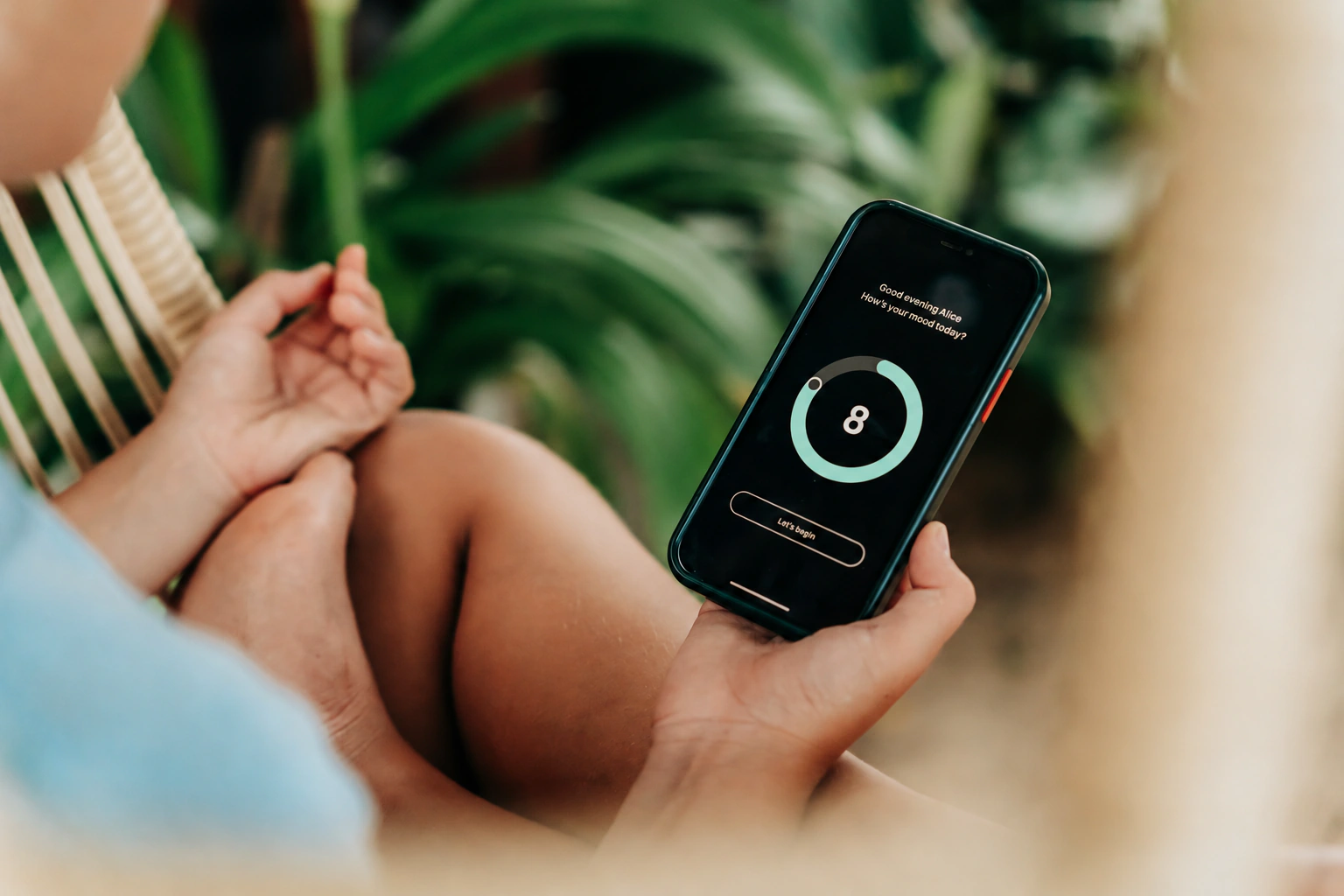
Digital wellbeing concerns how technology fits into your life: the benefits it supports, the demands it brings and the circumstances around its use. Connection, learning, work and enjoyment can coexist with interruption, pressure or unwanted checking.
Understanding that mixture gives a fuller picture of online habits than treating all time on a screen as the same experience.
What does digital wellbeing mean?
Communication researcher Mariek Vanden Abeele describes digital wellbeing in terms of the experienced “balance between the benefits and drawbacks” of mobile connectivity. Her framework considers the person, the technology and the circumstances together. It is a conceptual definition, rather than a diagnostic category or universal screen-time target. Vanden Abeele, Digital Wellbeing as a Dynamic Construct.
The same activity can mean different things in different settings. A video call might be an essential connection with family, a helpful discussion with a colleague or one more demand in an already crowded day. Duration tells us something about the activity, but little about that meaning on its own.
At unscatter, the principle of removal concerns reducing unnecessary demands rather than assuming every difficulty needs another routine. It is an editorial and design approach, not a clinical intervention. It connects digital wellbeing with attention management: understanding what occupies attention and the conditions that allow deliberate choice.
Why screen time cannot tell the whole story
An hour of an online seminar and an hour of checking whether a difficult message has been answered may look similar in a usage report. The activities, purposes and demands differ. A timer can show duration and frequency; it cannot determine the value of an experience by itself.
Research also needs careful interpretation. In a large analysis of adolescent datasets, Amy Orben and Andrew Przybylski found a small negative association between digital technology use and wellbeing. The work was correlational and concerned adolescents. It does not establish that a particular app causes harm, or prescribe a healthy number of minutes for every adult. Orben and Przybylski, 2019.
This does not make screen-time information useless. It means the measurement needs context. Time online may include paid work, accessible education, essential services or contact that would otherwise be difficult to maintain. A lower total can represent a welcome change, but the number alone cannot tell us whether something valuable was lost along with it.
How checking becomes a habit
Some phone use begins with a clear purpose. Some begins with an alert. Other occasions begin in a familiar pause: a queue, the end of a paragraph or the moment between meetings.
Research by Antti Oulasvirta and colleagues described checking habits: brief, repeated inspections of readily available content. Their studies found that checking could lead into other activity on the device. This early smartphone research helps explain a pattern; it does not mean every frequent check is an addiction. Oulasvirta and colleagues, 2012.
A check that takes seconds may lead to a message, a link and a longer visit. The distinction between the initial cue and what follows helps explain why an experience can last longer than originally intended. It also separates habitual checking from activity that a person deliberately values.
The digital distractions article explains the narrower question of how notifications and other inputs interrupt an intended activity. Digital wellbeing includes that question, while also considering what the technology makes possible.
The same service can serve different purposes
Consider an illustrative example. Noor opens a professional network to reconnect with former colleagues. She enjoys a message from someone she used to work with, then spends the rest of lunch comparing announcements, promotions and launches. The contact and the comparison happen on the same service, but they are different experiences.
Calling the whole platform either helpful or harmful would miss that distinction. Direct messages, public feeds, recommendations and work requirements can play different roles. In this example, the valued connection does not depend on every part of the service having equal value.
The same point applies across everyday life. An entrepreneur may depend on client messages. A student may find a study group invaluable. A creative may discover ideas through an online community. Someone returning to work after maternity leave may use digital connections to rebuild professional contact while managing changed responsibilities.
Intentional technology use includes enjoyment, access and connection. Its purpose need not be productivity. A relaxed conversation or an entertaining video does not require an efficiency argument to deserve a place in someone’s life.
What changes in connectivity can—and cannot—tell us
There is experimental evidence that changing connectivity can matter. In a 2025 randomised trial, blocking smartphone internet for two weeks improved measured sustained attention and reported wellbeing. Calls, texts and internet on other devices remained available. Castelo and colleagues, 2025.
The conditions matter. Only 119 of 467 enrolled participants met the specified compliance threshold; the main analyses retained participants regardless of compliance. This was a substantial, short-term intervention, not a comparison of every possible online habit or evidence that everyone should adopt the same restriction.
The study supports a bounded conclusion about the intervention tested. It does not establish which single feature produced each change, how the effects would persist in different circumstances or what arrangement would suit a person whose work requires mobile internet. Useful evidence can clarify a possibility without supplying a universal rule.
Human judgement and cognitive offloading
Digital wellbeing can include AI as well as feeds and messages. Psychologists Evan Risko and Sam Gilbert use cognitive offloading to describe changes to a task or environment that reduce its internal processing demands, such as setting a reminder. Their review examines benefits and trade-offs; it does not establish that using external help inevitably weakens thinking. Risko and Gilbert, 2016.
An AI system organising notes and a person deciding what the notes mean are different contributions. A summary may reduce the amount of text to read, while its accuracy, omissions and relevance still matter. The offloading concept helps describe a transfer of work; it does not, by itself, establish the quality of a particular tool’s output.
unscatter’s mission places human agency at the centre of technology development. That includes understandable suggestions and room to question, change or decline them. The human agency guide explains the wider relationship between assistance, judgement and choice.
Digital wellbeing habits depend on circumstances
Some online activity is necessary for income, care, learning or access to services. An expectation of constant availability can be a workplace arrangement, a caring responsibility or a client relationship. Explaining the difficulty only as a personal habit would leave those conditions out.
Clear response expectations, shared cover and accessible ways to participate concern how people organise work and relationships together. They are different from a rule about daily minutes. A sustainable relationship with technology depends partly on choices an individual can make and partly on conditions other people help shape.
Digital wellbeing is about the quality and context of digital life, alongside its quantity. The attention management overview connects this perspective with the wider question of what deserves attention and what competes for it.
Sources and further reading
- Vanden Abeele, M. M. P. (2021). Digital Wellbeing as a Dynamic Construct. Communication Theory, 31(4), 932–955. Conceptual framework; first published online in 2020.
- Orben, A., & Przybylski, A. K. (2019). The association between adolescent well-being and digital technology use. Nature Human Behaviour, 3, 173–182. Analysis of observational adolescent data.
- Oulasvirta, A., Rattenbury, T., Ma, L., & Raita, E. (2012). Habits make smartphone use more pervasive. Personal and Ubiquitous Computing, 16, 105–114. Three studies of early smartphone habits; first published online in 2011.
- Castelo, N., Kushlev, K., Ward, A. F., Esterman, M., & Reiner, P. B. (2025). Blocking mobile internet on smartphones improves sustained attention, mental health, and subjective well-being. PNAS Nexus, 4(2), pgaf017. Preregistered randomised trial.
- Risko, E. F., & Gilbert, S. J. (2016). Cognitive Offloading. Trends in Cognitive Sciences, 20(9), 676–688. Research review; DOI.